
If your website is not ranking on Google, you might wonder what is going wrong. You may have published useful pages, invested in a professional design, and still received very few visitors. Search visibility depends on several factors, including indexing, keywords, content quality, and technical performance.
In this guide, I explain seven common reasons websites struggle to rank and practical steps you can take to improve them.
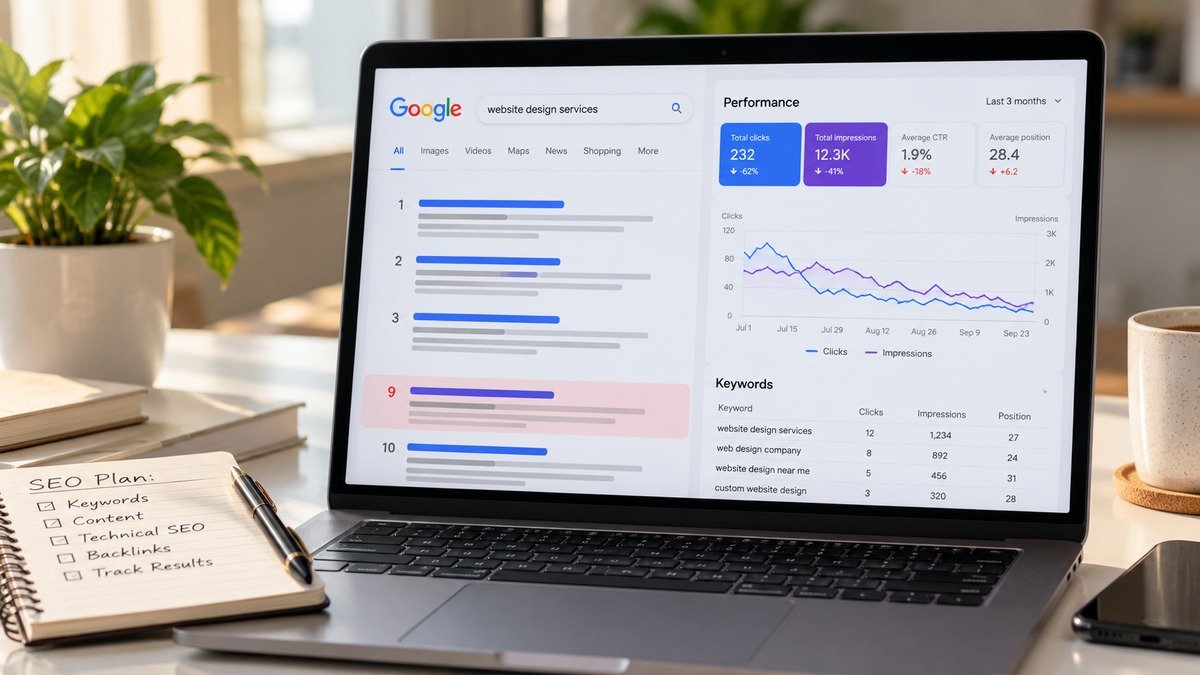
Your Website Is Not Indexed
Google cannot display a page in search results unless it has discovered and indexed it. Search for your website using the site operator, then check Google Search Console for indexing issues. Submit an XML sitemap and inspect important URLs. Remember that indexing does not guarantee rankings, but it is an essential starting point.
You Are Targeting the Wrong Keywords
Choosing keywords without understanding search intent can attract the wrong audience or create unrealistic competition. For example, a local service business may benefit more from specific location based searches than broad national terms. Research what potential customers actually type, review competing pages, and select keywords that match the services you provide.
Your Content Does Not Answer Searchers' Questions
Google aims to show pages that satisfy what people are looking for. Thin, repetitive, or outdated content may struggle against more useful resources. Improve each page with clear explanations, accurate details, descriptive headings, and answers to common questions. Write for real visitors first rather than repeating your focus keyword excessively. Update information whenever your services or industry changes.
Your Website Loads Too Slowly
Slow pages can frustrate visitors, especially on mobile devices. Large images, unnecessary scripts, and inefficient hosting may contribute to poor performance. Compress images, remove unused plugins, and test important pages using PageSpeed Insights. Prioritize improvements that make your website faster and easier to use instead of chasing a perfect score.
Technical SEO Problems Are Holding You Back
Broken links, accidental noindex settings, confusing redirects, and duplicate pages can make a website harder for search engines to understand. Check your navigation, canonical URLs, mobile layout, and internal links. Use Search Console to identify crawling problems. Fixing technical issues creates a stronger foundation, although technical improvements alone will not guarantee higher positions.
Your Website Has Limited Authority
Relevant links from trustworthy websites can help search engines discover your content and understand its reputation. However, buying suspicious backlinks or exchanging links excessively can create risks. Focus on publishing helpful resources, building genuine professional relationships, and earning mentions from relevant local organizations. Quality matters more than collecting large numbers of unrelated links.
Your Local SEO Needs Attention
If your business serves customers in Bangalore, local visibility may be especially important. Keep your Google Business Profile accurate, choose appropriate categories, and provide consistent contact information. Encourage genuine customer reviews without offering incentives. Create useful service pages that explain where you work and what you offer. Avoid adding location names unnaturally just to attract searches.
Frequently Asked Questions
How long does it take to rank on Google?
There is no fixed timeline. Improvements may take weeks or months to become visible, depending on competition, website history, and the work involved.
Can a new website rank on Google?
Yes. New websites can appear in search results, but they often need time to build useful content, discoverability, and credibility.
Do I need paid ads to improve organic rankings?
No. Advertising does not directly purchase better organic rankings. SEO focuses on improving unpaid search visibility through relevant content and website improvements.
How to Prioritize Your SEO Fixes
Begin with issues that prevent people or search engines from accessing important pages. Next, improve content on pages closely connected to your services. Track impressions, clicks, and enquiries over time. Make one improvement at a time, document the results, and avoid expecting overnight changes.
Conclusion
A website not ranking on Google does not always have one simple problem. Start by checking indexing, search intent, content quality, speed, technical health, authority, and local visibility. Then prioritize changes based on what your visitors need. As an independent digital marketing freelancer, I help businesses understand SEO opportunities and plan practical improvements. Explore my SEO services if you want guidance tailored to your website and goals.Consistent improvements can strengthen your long-term organic search visibility.